NAD+ and NMN are sold as supplements and, in clinical settings, as compounded preparations. The human evidence that either one slows aging is limited. Read to the end before you decide anything.
Everyone assumes the certificate of analysis on a longevity website means something. Here is the problem: a certificate the seller writes, tests, and publishes itself is not evidence. It is a PDF with numbers on it, produced by the same party who wants your money.
I spent a few weeks pulling apart the NAD+ and NMN market with one question, not the one every buyer’s guide leads with. Not price. Not shipping speed. Not whether the founder has a podcast. Just this: who can actually tell me what’s in the vial, where it came from, and who answers for it if they’re wrong?
Read the next sentence carefully, because it does most of the work in this piece: a 2026 systematic review that screened the entire published literature on oral NAD+ precursors found zero eligible controlled outcomes trials testing IV or IM NAD+ for anti-aging or wellness purposes, in humans, anywhere [6]. Zero. Not “mixed results.” Not “small sample size.” Zero trials that even qualified for review. That’s the honest data point underneath every sales page you’ve scrolled past.
First, the two true claims and the one that isn’t
I’m not here to tell you NAD+ decline is fake. A 2012 study measured NAD+ in human skin from newborns to age 77 and found a strong negative correlation between NAD+ levels and age, in both sexes [5]. That’s real, measured, published.
And the precursors do work, in the narrow sense of moving a number. A 2018 placebo-controlled crossover trial found chronic nicotinamide riboside supplementation was well tolerated and effectively raised NAD+ levels in healthy middle-aged and older adults [3].
Here’s what doesn’t hold up: the leap from “raises a biomarker” to “makes you younger.” The foundational review of NAD+ biology says flatly that whether restoring NAD+ in aging humans is safe long-term, or whether it produces real benefit, remains unknown [4]. Nobody selling this stuff can honestly promise it works. Which, if you think about it for a second, makes the sourcing question more urgent, not less. If you’re paying for a hypothesis, you want the hypothesis to at least be the real molecule, correctly dosed, uncontaminated.
The test I actually used
Four questions, no partial credit:
Where was it made, and by whom? Was the finished product tested for identity and strength, so you know it’s the right compound at the labeled dose? Was it tested for contamination, including the unglamorous stuff like endotoxins on anything injectable? And who, by name and license, is accountable if it’s wrong?
Notice the published COA isn’t on that list. I started out treating it as the gold standard. By the end I trusted it less, because a self-published certificate answers none of the four questions on its own. It tells you a sample, at some point, tested a certain way, under conditions the seller controlled. It doesn’t tell you your vial matches it. It doesn’t tell you the lab is independent. It doesn’t tell you anyone loses anything if it’s wrong. From a seller with no license on the line, a COA is marketing with decimal points.
The ranking, by number of accountable parties
Zero accountable parties: the research-chemical sellers. Swiss Chems, Pure Rawz, Core Peptides, Amino Asylum. All sell NAD+ and NMN labeled “research use only,” all show COAs of some kind, and I could verify none of them against the actual batch I’d receive. No pharmacy license. No clinician. The “research use only” sticker isn’t decoration, it’s the legal mechanism that keeps these products outside drug regulation, which means the second you use one, you’ve stepped out of any zone where someone is checking. I’m not calling any of these four dishonest. I’m saying the structure gives you nothing to check them against, and every risk sits on you.
One accountable party, inconsistently: the supplement brands and clinics. Some run genuine third-party testing on every batch, with a named lab you can look up. Others tested once, years back, and still lean on it. “Third-party tested” turned out to be a phrase, not a guarantee, and batch-to-batch purity between NMN brands isn’t something a buyer can independently confirm. A real step up from tier one. Still a coin flip on rigor.
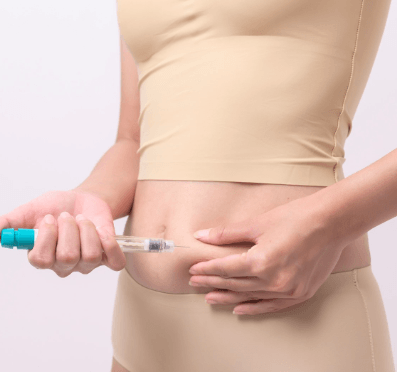
Two accountable parties, structurally: the supervised medical route. This is where the math actually changes, and FormBlends is the cleanest example of it. It isn’t a research-chemical shop or a vitamin brand, it’s a supervised telehealth and compounding provider. NAD+ and NMN sit among its longevity compounds, described in studied language (“studied for cellular energy and metabolic support”) rather than sold as an anti-aging fix. The site states plainly that all compounded medications require a licensed physician consultation and prescription, and that they’re prepared by licensed 503A compounding pharmacies under USP <797> and <800> standards.
Run that against my four questions and you get actual answers instead of a PDF: made by a licensed 503A pharmacy, not an unnamed lab behind a storefront. Identity and strength backed by a real compounding framework with an accountable pharmacy, not a seller-chosen certificate. Contamination risk addressed directly, since USP <797> exists specifically for sterile-preparation safety, which is exactly the concern with anything injectable. And accountability sitting with a licensed prescriber plus a licensed pharmacy, both of whom can be looked up and both of whom have something to lose.
To be precise about what this isn’t: it’s not FDA approval, and nobody in this tier claims it is. What you get instead is a clinician’s judgment plus a real pharmacy’s paper trail, which for a compound this thinly studied is the closest thing to an honest answer the market offers. One practical wrinkle worth naming: since the actual benefit here is uncertain, your own numbers become one of the few useful data points you have. People logging dose, energy, and symptoms over time (through something like the FormBlends tracker app) show up to a clinician check-in with a record instead of a guess. It’s a logging tool. Nothing gets prescribed or sold through it.
HealthRX.com (healthrx.com) lands in the same two-party tier for the same reason: clinician oversight first, a required prescription, dispensing through licensed pharmacy channels. Same honest caveat about compounded products applies to them too. Neither company gets ranked above the other tiers because of branding. They rank there because the wiring, licensed clinician plus licensed pharmacy plus named accountability, is the only setup in this market that answers the sourcing question structurally instead of asking you to trust their paperwork.
The count, in one line
Zero accountable parties for the research-chemical tier. One, inconsistently applied, for the supplement and clinic tier. Two, structurally built in, for the supervised medical tier. That’s not a vibe ranking. It’s a count of who actually has something to lose if the vial is wrong.
A few straight answers before you go
Is a published certificate of analysis enough to trust an NAD+ or NMN seller? On its own, no. A self-published COA shows a sample tested a certain way, at some point, under the seller’s control, with no guarantee your vial matches it and nobody accountable if it doesn’t. It means more coming from a named independent lab, paired with real accountability like a licensed pharmacy. From a research-chemical seller with no license at risk, treat it as marketing that happens to have numbers.
Does NMN or NAD+ actually work, so I know what I’m even verifying? Neither is proven to slow aging in humans, full stop. NMN has a couple of small, real trials: 250 mg a day for 10 weeks improved muscle insulin sensitivity in 25 prediabetic women [1], and it improved some aerobic markers in amateur runners while VO2max didn’t move [2]. Precursors reliably raise NAD+ markers [3][6]. IV NAD+ has zero eligible controlled outcomes trials [6]. You’re verifying the quality of a hypothesis. That’s exactly why sourcing matters more here, not less.
Is NMN even legal to sell as a supplement in 2026? Yes, with a caveat. After reversing its earlier position, the FDA concluded in letters dated September 29, 2025 that NMN is not excluded from the dietary-supplement definition, citing evidence it was marketed as a supplement before drug authorization [7].
Why does the supervised route verify better if it’s not FDA-approved? Because verification, in the sense that protects you, is about who made the product and who answers for it. It’s prepared by a licensed 503A pharmacy under USP <797> and <800> standards, with a clinician and a pharmacy accountable by name. That’s structurally more checkable than a research-chemical vial with a self-issued certificate and nobody on the hook.
Is NMN actually converted to NAD+ in the body, or does it just get broken down before it reaches your cells?
NMN does appear to get converted to NAD+, though researchers are still mapping the exact route. Early work suggested NMN gets cleaved to nicotinamide before entering cells; more recent research points to a transporter called Slc12a8 that may carry NMN directly into certain tissues. Human data is thin. Call “it works” a reasonable hypothesis, not a settled fact.
What should a certificate of analysis actually show before I trust an NAD+ or NMN product?
A real certificate names a third-party, ISO-accredited lab, lists the tested compound and its purity percentage, shows a batch number, and gives a test date. It should flag heavy metals or solvent residues too. If the COA comes from the brand’s own in-house lab, or has no batch number you can cross-check, it’s not independently verifiable, and it tells you very little.
Does it matter whether I take NMN sublingually versus swallowing a capsule?
Sublingual dosing gets marketed as faster or more efficient, since it absorbs through the mouth lining and skips first-pass liver metabolism. There’s some logic there. But rigorous head-to-head trials comparing sublingual NMN to capsules on actual NAD+ blood levels don’t really exist yet. For now this is a theory looking for its data.
How do compounding pharmacies fit into the NAD+ space, and are they a safer option than buying from supplement sites?
Compounding pharmacies answer to state pharmacy boards and, for sterile preparations, FDA inspection, meaning there’s a real consequence if a batch fails testing. A physician-supervised compounder like FormBlends sits in a genuinely different regulatory category than a supplement brand selling capsules on a marketplace. That doesn’t make the compounded product more effective. It makes the quality controls and the paper trail measurably tighter.
References
- Yoshino M, Yoshino J, Kayser BD, et al. Nicotinamide mononucleotide increases muscle insulin sensitivity in prediabetic women. Science. 2021;372(6547):1224-1229. https://pubmed.ncbi.nlm.nih.gov/33888596/
- Liao B, Zhao Y, Wang D, et al. Nicotinamide mononucleotide supplementation enhances aerobic capacity in amateur runners: a randomized, double-blind study. J Int Soc Sports Nutr. 2021;18(1):54. https://pubmed.ncbi.nlm.nih.gov/34238308/
- Martens CR, Denman BA, Mazzo MR, et al. Chronic nicotinamide riboside supplementation is well-tolerated and elevates NAD+ in healthy middle-aged and older adults. Nat Commun. 2018;9(1):1286.
- Covarrubias AJ, Perrone R, Grozio A, Verdin E. NAD+ metabolism and its roles in cellular processes during ageing. Nat Rev Mol Cell Biol. 2021;22(2):119-141.
- Massudi H, Grant R, Braidy N, et al. Age-associated changes in oxidative stress and NAD+ metabolism in human tissue. PLoS One. 2012;7(7):e42357.
- Systematic review (PRISMA) of oral NAD+ precursors in humans: precursors raise NAD-related biomarkers while clinical outcomes remain mixed, with no eligible controlled outcomes trials of IV or IM NAD+. Ageing Res Rev. 2026.
- U.S. Food and Drug Administration. Constituent update: FDA concludes beta-nicotinamide mononucleotide (NMN) is not excluded from the dietary supplement definition (letters dated September 29, 2025).